
In brief
Calibration and verification requirements for pH, EC, temperature, level, light and rotation measurements.
Measurement principle
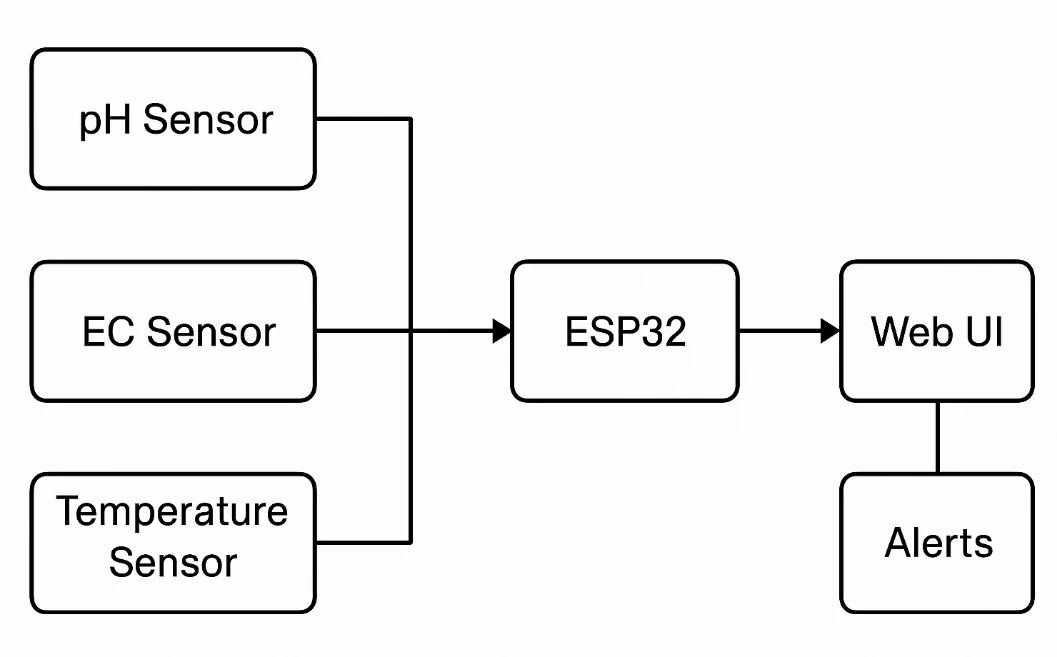
A sensor reading becomes research data only when its identity, calibration, range, sampling interval, temperature conditions and failure rules are recorded.
Minimum calibration plan
| Sensor | Calibration/verification | Frequency trigger |
|---|---|---|
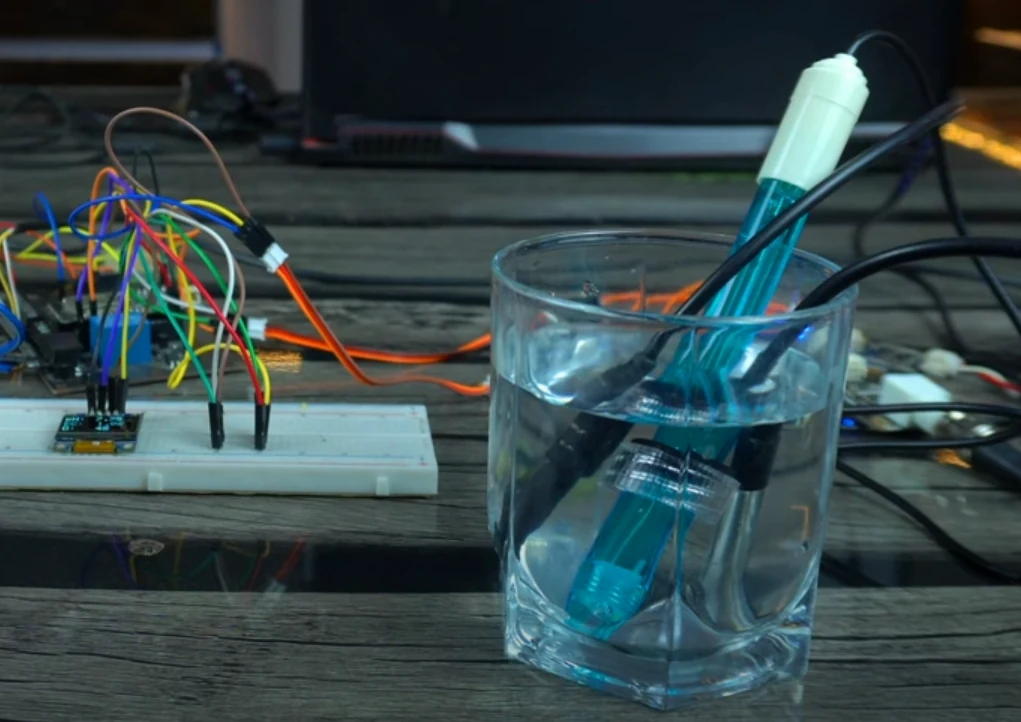
| pH | two- or three-point buffers bracketing operation; slope and offset retained | before a trial, after cleaning, on drift or according to electrode stability |
| EC | certified conductivity standard near operating range; temperature compensation checked | before a trial and after probe maintenance |
| Solution temperature | comparison with traceable reference in stirred bath | before deployment and on replacement |
| Level | measured-volume additions across working range | after geometry or sensor position changes |
| PPFD | reference quantum sensor/spectroradiometer mapping | after light, optics or geometry changes |
| Rotation | encoder or video reference across commanded speeds | after drive or load changes |
pH electrode model
SEN-1
Ideal Nernst response of a hydrogen-ion-sensitive electrode; practical slope and offset are fitted during calibration.
ExplanationThe ideal electrode voltage changes linearly with pH. Real sensors still require measured slope and offset calibration.
Calibration record
calibration_id, sensor_id, sensor_model, serial_number,
reference_standard, reference_lot, reference_value,
measured_value, solution_temperature, fitted_slope,
fitted_offset, residual, operator, timestamp, firmware_version
Fault rules
Out-of-range, non-finite, implausibly fast-changing or stale measurements disable automatic correction. The system logs the rejected value and the reason; it does not silently replace it with a plausible number.
Traceability
Calibration records identify reference material, method, environmental conditions, corrections and uncertainty.